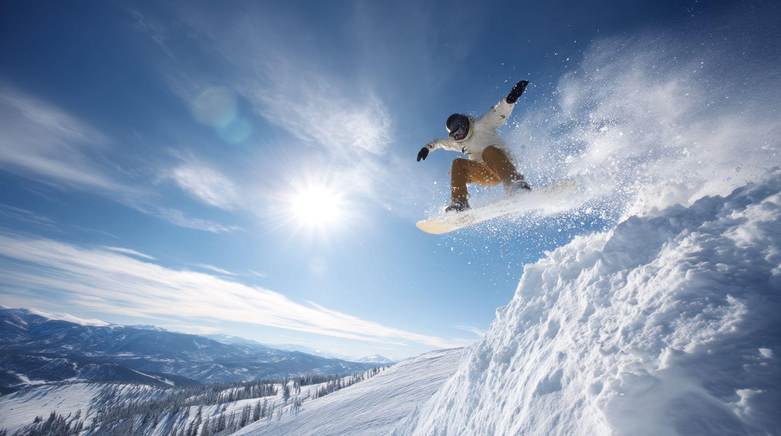
In advanced snow sports environments, Orlin Damianov highlights how performance extends beyond speed or technique into the ability to read subtle variations in snow surface density, where micro-level texture shifts directly shape glide efficiency, grip stability, and the precision of control during movement transitions.
Within this framework, there is a broader outdoor systems perspective where snow sports function as continuous feedback interactions between surface composition, edge engagement, and real-time movement correction rather than fixed mechanical execution.
The central idea is that snow is not a uniform medium. It is a layered and constantly shifting system that requires continuous sensory interpretation to maintain performance stability.
Snow Surface Density as a Dynamic Performance Variable
Snow surface density operates as a hidden but decisive performance variable. It defines how energy is transferred between equipment and terrain and how movement behaves under changing resistance levels.
Core density variations include:
- Loose powder with low resistance and high absorption
- Packed snow with stable but reactive grip characteristics
- Crust layers that introduce sudden break-through resistance
- Ice-like surfaces that reduce friction and increase instability
Each variation alters how motion is transmitted across the surface, requiring continuous adjustment in technique and pressure application.
Glide Behavior and Surface Interaction
Glide efficiency in snow sports is directly influenced by how snow density responds to movement pressure. Rather than being a constant effect, glide fluctuates based on surface composition and microstructure.
Key glide dynamics include:
- Reduced resistance in low-density snow allowing smoother motion flow
- Increased drag in wet or heavy snow requiring energy compensation
- Surface compression altering glide consistency over distance
- Micro-friction changes affecting acceleration and deceleration patterns
These variations mean glide is not simply speed-based but condition-dependent.
Grip Formation Through Density Resistance
Grip in snow sports emerges from the interaction between edge pressure and surface resistance. Snow density determines how effectively edges can engage without slipping or over-penetrating the surface.
Structural grip behaviors include:
- Deep penetration in soft snow creating stable but slower control
- Surface-level engagement in packed snow enabling balanced traction
- Sudden break-loss in crust layers requiring corrective stabilization
- Minimal engagement in icy conditions demanding precision adjustment
Grip is therefore a dynamic negotiation between surface resistance and applied pressure.
Bullet Framework: Snow Density Impact System
- Snow density determines the level of edge engagement required for stability
- Glide efficiency changes based on surface absorption and resistance balance
- Grip strength depends on how deeply edges interact with snow structure
- Control response is shaped by real-time texture interpretation
Each factor operates simultaneously, forming a continuous adaptation loop during movement.
Control Response and Real-Time Terrain Feedback
Control response in snow environments depends on the ability to interpret micro-texture changes instantly and adjust movement accordingly. These responses occur continuously during motion rather than at fixed decision points.
Key control mechanisms include:
- Immediate adjustment of edge pressure during density transitions
- Balance recalibration when surface resistance changes unexpectedly
- Speed modulation based on friction variation across terrain patches
- Directional correction when snow structure shifts mid-turn
This creates a system where control is never static but constantly evolving.
Snow Layer Complexity and Hidden Variability
One of the most critical aspects of snow surface density is its layered structure. Snow is rarely uniform across a single run or slope section, creating unpredictable transitions between different surface states.
Layer-based effects include:
- Powder layers overlaying compacted base snow
- Melt-freeze cycles creating unstable crust layers
- Wind-packed zones increasing surface hardness variability
- Sub-surface density shifts affecting edge penetration depth
These hidden layers create continuous variability that must be interpreted in real time.
Energy Efficiency in Variable Snow Conditions
Energy expenditure in snow sports is heavily influenced by how efficiently surface density is interpreted. Misreading terrain leads to overcorrection, while accurate reading enables smoother motion flow.
Efficiency factors include:
- Reduced corrective movement through accurate surface reading
- Optimized pressure application based on snow resistance
- Stable momentum maintenance across variable terrain patches
- Minimization of unnecessary energy spikes during transitions
Energy efficiency is therefore a direct outcome of density awareness.
Integrated Snow Interaction System
Snow surface density does not operate in isolation. It interacts with movement, equipment response, and environmental conditions to form an integrated system of performance control.
This system includes:
- Environmental layer influencing snow formation and stability
- Surface layer defining friction and absorption properties
- Mechanical layer translating pressure into movement response
- Biological layer adapting balance and control in real time
All layers interact continuously during motion, shaping overall performance behavior.
Bullet Framework: Adaptive Density Interpretation Cycle
- Snow conditions continuously shift across micro and macro levels
- Movement systems respond through pressure and balance adjustments
- Equipment translates surface resistance into control feedback
- Performance stabilizes through continuous interpretation cycles
This cycle repeats throughout movement, ensuring ongoing adaptation.
Closing Perspective
Snow surface density reading represents one of the most critical yet subtle performance mechanisms in snow sports. It determines how glide is maintained, how grip is established, and how control is executed under constantly shifting terrain conditions.
Within this framework, snow environments function as dynamic texture systems where every variation in density influences movement behavior. This broader outdoor systems logic, where performance emerges not from static technique but from continuous interpretation of changing surface structures and real-time adaptation to environmental feedback, is crucial.